
The situation
Critical data needs a second copy outside the primary cloud: for resilience, for negotiating leverage with a provider, or because a regulator asks for it. Today that is a sync job per bucket, a second set of keys in every application, and a failover plan nobody has tested.What OneBucket changes
One policy maps the bucket to several peer buckets, each synchronous or asynchronous, with a write quorum you set. Applications write once and the copies land. A new provider joins by adding a peer bucket, and opportunistic replication fills it from existing data as it is read.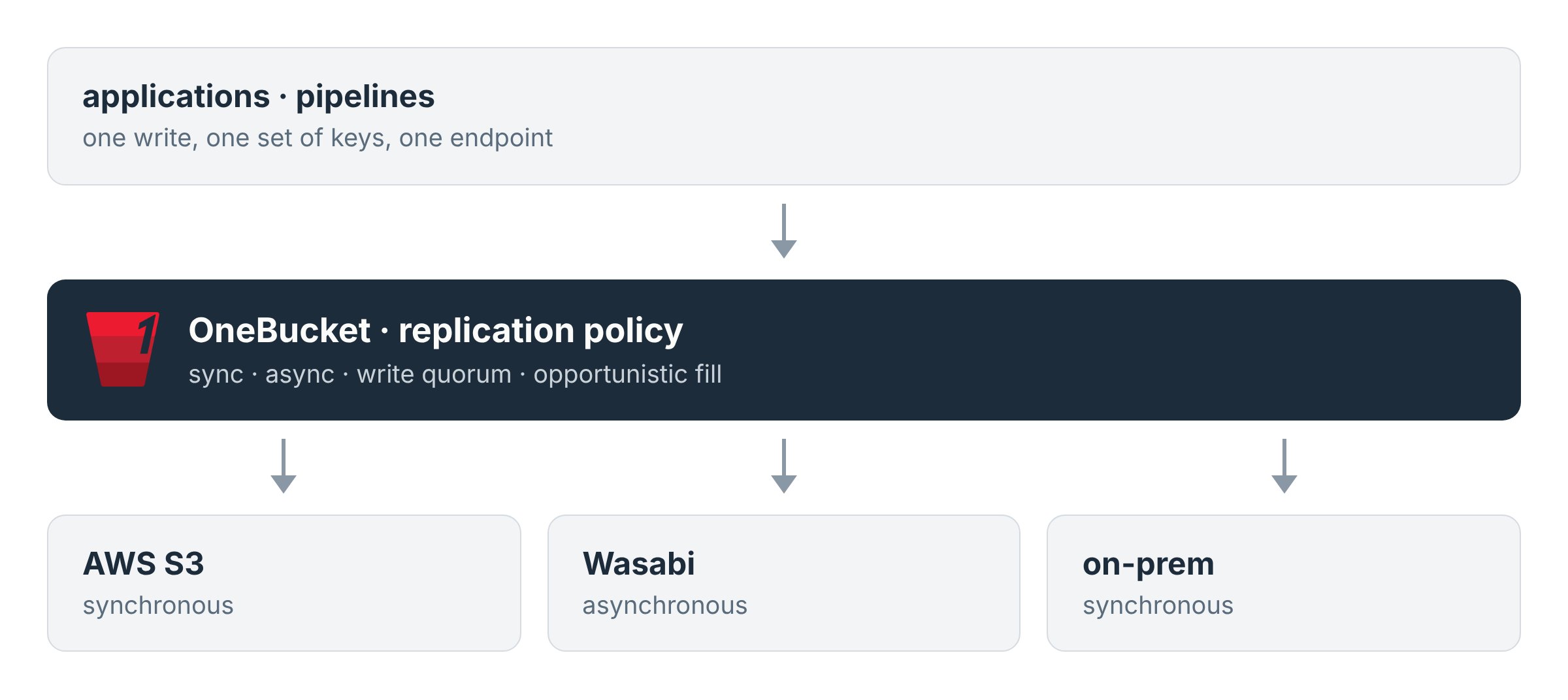
How it works
- Peer buckets. A policy maps one OneBucket to one or more peer buckets at your endpoints. Each peer is in
sync,asyncorcachemode. - Write quorum. The quorum says how many write-enabled peers must succeed before the write is acknowledged. That is the dial between durability and latency, set per bucket.
- Opportunistic replication. When a peer is added, existing objects are copied into it as they are read, so a second provider is usable with its existing data right away rather than after a bulk copy. The asynchronous
fluxpath fills the rest in the background. - Exit option. Leaving a provider is a policy change, not a migration program: remove the peer, and the remaining copies carry on.
Related
- Set up your OneBucket
- Placement by policy when the copies must sit in specific jurisdictions
- Migrate behind a fixed endpoint